Tuesday, July 28, 2009

Story of the Little Mole Who Went In Search of Who Dunit

I know this is technically not a novel, but it is an awesome story, very fast read, and one of my personal favorites!

Anyway, this is a story of a mole who comes out of his hole one morning and discovers he has a new "hat" on the top of his head. He is very upset with his new "hat" and is unsure who put it there! Mr. Mole then takes up a mission to discover who gave him the mysterious "hat" You might think that having a hat is very cool, but after you discover what kind of "hat" it is and how it smells/looks you too would be upset. But don't worry in the end Mr. Mole gets his revenge! =)

Thursday, July 09, 2009

Hannah's Dream


I don't know if everyone knows this about me, but I absolutely love elephants. So my coworkers have the habit of pulling gnay donated or advanced reader books that say anything about elephants or have them on the cover. I got this book last summer I think and have yet to read it. Last weekend I picked it up and finished it in three days!

Hannah's Dream by Diane Hammond was not only about a sweet, loving, and solo elephant in a zoo, but all the family she gains in human form. The elephant, Hannah has spent most of her life with Sam, her keeper and as his health declines from diabetes he worries about what will happen to her. She is a little worried herself about things around her and being left in the barn alone at night. So Sam and his wife do everything they can to show their love for Hannah. There are a few side stories in Hannah's Dream that explain why Sam loves the elephant so much and why others do too.

The characters are great in this book, and of course there are some that may get on your nerves at first, but everyone has two sides. When Sam decides Hannah needs a home where she can stay out all the time and other elephants can keep her company, his friends get together a plan to transport her away from the Seattle Zoo to a sanctuary in California. I won't say more, because it has a great ending. It was a touching story, and a quick read, so I really recommend it if you like animal books. Or elephants!

Wednesday, June 10, 2009

Running From Strangers by C.C. Harrison


I picked up this book since one of the reviews said this author would appeal to fans of Nora Roberts' Romantic Suspense novels. There are some key characteristics to the two authors. Both authors develop their characters to be more than two dimensional stereotypes. Nora Roberts develops her secondary characters more. C.C. Harrison develops the secondary characters a little, but you are left wondering what their motivations might be. Well, this is with the exception of one female "villian" - she is developed fully and I would have liked to have read more about her.
One of my issues with this novel was that I felt as if the novel was originally a lot longer than the 301 pages it turns out to be. There are some parts where it seems there is not enough background, or something in the main characters' lives happened that affects the story.. but the reader doesn't get to read it. My uneducated guess is that perhaps the author was told to cut the story; well-known authors' readers might welcome 400 pages. Newer authors do not have the luxury.
Anyway, I did enjoy this novel and I would read another one by her... provided it was longer. The suspense had a good pace; the storyline was believable; and I did like the main characters. There is a lot to the storyline as far as corruption, bribery, somewhat violent action (not gory, not too descriptive). The "bad things" that the enemy is doing are bad, but that too is not in grisly detail, which I appreciate. Sometimes Allie Hudson (female main character) annoyed me because I wanted her to be more forthcoming with the male lead.
I would recommend it, I would read it again, and I will definitely take a look at her next title.

Friday, June 05, 2009

Not Becoming My Mother


Not Becoming My Mother & other things she taught me along the way by Ruth Reichl

Many have said at one time or another “I don’t want to be like my mother.” But have we ever really investigated who our mothers really were or are? What they dreamed about or the battles that they fought?

On what would have been her mother’s 100th birthday, Reichl embarks on a painful, but yet eye-opening journey into who her mother really was. Through reading her mother's diaries and letters, Reichl can see her mother's sacrifices and struggles and all the lessons she hoped her daughter would learn from her life.

Readers may walk away asking themselves "did/do I really know my mother and what did I learn from her? An engaging quick read, two thumbs up!

Thursday, May 28, 2009

DIGGING TO AMERICA by Anne Tyler


In my attempt to read books from different genres and authors, I stumbled upon this paperback in our collection. The story opens with two young families waiting for the arrival of their newly adopted babies coming from South Korea. Bitsy and Brad Dickinson-Donaldson are the stereotypical loud, affluent, and overconfident young "American" couple. Sami and Ziba Yazdan are a young Iranian American couple. I don't feel the author takes a lot of time to develop her characters - her focus is more on the relationship issues that come up between the different characters. The only character fully developed was Sami's mother Maryam who immigrated from Iran as a young bride. Bitsy's confidence in her child-rearing ways seems more of a mask - towards the end of the book you see that underneath it is a mask for her uncertainty of who and what she is. She makes strong efforts to preserve her child's Korean heritage by dressing her in traditional costume every year on Arrival Day. Her insistence on celebrating Arrival Day, the day the babies arrived to the United States, is indicative of this. Although birthdays are celebrated, they are overshadowed by the girls' arrival to the United States, as if this is much more important. Ziba, on the other side of the coin, is content to have her child assimilate directly into her Iranian American culture. She does not emphasize the differences between her and her child.
What was most interesting in this book was how cultures can differ. You see the differences between Ziba and Bitsy, between Bitsy and her father, between Sami and his mother Maryam, and even in Maryam and her relatives back in Iran. The assimilation of other cultures into the "American" culture is fascinating. Maryam no longer feels as if she belongs in Iran, although she still feels like a foreigner in the United States 40 years after her arrival. Her feelings of alienation intensify after 9/11 where any person of any Middle East heritage is suspect, regardless of the current political situation.
Maryam is the only shining star in this novel - although I did not always sympathize with her. Her fear of losing her Iranian heritage leads to stubborness, especially when it comes to her relationship with Bitsy's father. SPOILER: The author shows Maryam misinterpreting his motives - assuming that he is disrespectful of her heritage although he tries to integrate it into his marriage proposal. This is where you start to realize that the differences in the culture can cause so much discomfort and pain, although there is no intention of doing so.
Anne Tyler's strength lies in her development of the issues. This book started examining what it means to claim yourself as an American but it was not long enough to come to any conclusion. Fans of Richard Russo or Anna Quindlen will enjoy the everyday characters dealing with everyday issues of their lives. It was not a terrible book, or even a bad book. I didn't enjoy it, mostly because I had trouble identifying or sympathizing with most of the characters.

Wednesday, May 27, 2009

Living Dead Girl by Elizabeth Scott

Living Dead Girl by Elizabeth Scott
September 2, 2008


This book captivates the reader but engages the soul. You cannot stop reading; a nightmare awakened with eyes wide open. The story takes us into the point of view of the "too old" teen reflecting from the eyes of abuse. "Alice" was taken at the age of ten and now at fifteen she shares her story with us as we are put aside to witness, to view the pain, the loss, the sadness enraged by this monster who infected his sickness into the world. I was told I would not be able to put this book down, I will go another step saying that even after page 170 and the book is closed, the end reached....its haunting words leave a shadow, an essence imprinted on your soul...you do not forget how she won her freedom.

Tuesday, May 26, 2009

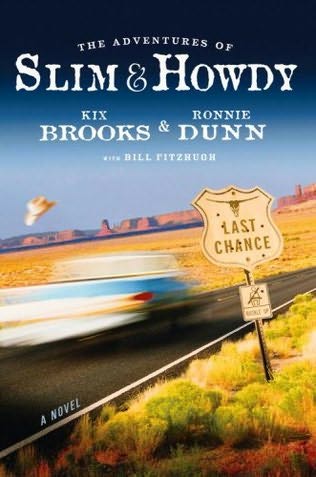
The Adventures of Slim and Howdy


The Adventures of Slim and Howdy
by Kix Brooks and Ronnie Dunn

A couple of Tuesdays ago, I was out browsing the stacks before I started work and happened to find this book sitting on the shelves of the Green Valley Library. I had just recently given up on Artemis Fowl and the Lost Colony (good series up to this book, written by Eoin Colfer... still recommend it, but just to warn you that it gets a bit sleepy there.) and several books that I had on hold were either on their way over or I was on the waiting list for them.

Being a country music fan, I was immediately interested to see that Brooks and Dunn of "My Maria", "Only in America", and "Play Something Country" fame had put together a book. I'd been to one of their concerts when I was younger and enjoyed them and they're not too bad when it comes to writing a book either!

The book is the story of two cowboys who run into each other and decide to hit the road. They both happen to be singers, so they go to a few bars and perform nightly. One of the bars' owners is a friend of both of theirs gets kidnapped and the fun continues from there. I actually found the climax of the book to be a bit of a bore and prefered the chemistry that went on between the Slim and Howdy characters (Slim is Ronnie and Howdy is Kix).

All in all, not a bad read, but not something I'd nominate for book of the year. Plus, there's a music disc in the back with a pretty good song! Just as long as they keep to their day jobs, they'll be fine...

Tuesday, April 28, 2009

Quiet, Please: Dispatches from a Public Librarian


Quiet, Please: Dispatches from a Public Librarian
by Scott Douglas


So, I stumbled upon this book a while ago and placed a request for it through our nifty inter-library loan system and received it, and finished it quickly, last week. Little did I know that one of the new Green Valley Library staff members was featured in it...

Scott Douglas started out as a library shelver/page in a small Anaheim, California library and this book is a tale of his experiences through shelverdom through library school and his time with an MLS (Master's in Library Science). The chapters are all uniquely started with a "book title" and Dewey Decimal Number, ranging from people wanting to kill him to finding the love of his life. Throughout this time, you learn to enjoy the cast of library regulars, ranging from the crazies to the kind old ladies who give you treats whenever they come in.

Overall, it's a great read and quite insightful. Quiet, Please definitely trumps the earlier published Freaks, Geeks, and Oddballs by Don Borchert... and I'm not just saying that because I know someone who knows the author. Oh right, you probably want to know the mysterious Green Valley staffer who worked side by side with Mr. Douglas, don't you? You'll have to make an educated guess. :)

Tuesday, April 21, 2009

The Alchemyst


The Alchemyst: Secrets of the Immortal Nicholas Flamel
by Michael Scott

I read a lot of YA/J and that's because I love the fantasy genre. With a lot of "adult" fantasy books, they're huge tomes and remind me too much of the classics, but when they're written for the younger crowd, the authors pump out some great stuff and this is a perfect example of that.

Sophie and Josh, fraternal twins, are spending their summer in California while their parents are on an archaeological dig in Montana, I think. Sophie finds a job at a coffee shop and Josh goes to work for an elderly couple that own a bookstore: Nick and Perry Fleming. Everything goes swimmingly until one afternoon, a mysterious man enters the bookstore and nothing ever remains the same for them.

We soon discover that Nick and Perry are a bit older than they look. They're actually about 500 years old, being Nicholas and Perenelle Flamel. Nicholas is an alchemyst and has been keeping himself and his wife alive by creating doses of an immortality potion. That's only the beginning of this adventure though.

I don't want to reveal too much more about this first volume of a proposed nine-book series, two of which are already out and the third one is due in May. If you enjoy history or mythology at all, or even if you like a quick-paced read, I suggest you to give this one a shot. Highly recommended!

Wednesday, April 08, 2009

Tess of the D'Urbervilles

So, I love to read classics every now and then and have never read Thomas Hardy's Tess of the D'Ubervilles. One day Seth and I happened to turn to PBS and were caught up in the middle of this awesome Masterpiece Theater movie. And I had to figure out what it was. As soon as I found out it was a book I had to turn it off. When I tried to read the book though, I had so much going on I couldn't get into it. BUT! Our great Overdrive audio books has had some books added it looks like and there it was.

I honestly really loved this book. It was one of the few that I purposely did more cleaning just so I had an excuse to listen to. It was narrated by Ralph Cosham and I really enjoyed his voice and storytelling. He also has narrated Four Feathers which looks like it was recently added to Overdrive too!

The story seems modern enough to have kept my interest, and Tess through all her hardships was easy to relate to, and feel bad for. I spent the entire story rooting for her and hoping she gets what she wants. The end was so unexpected from other stories involving a loving couple, and was not the sort of happy eneding you may find in books written at this time period. Hardy's moral conclusion was actually what should have happened, even though it left me wanting more of the story!

Wednesday, March 26, 2008

"sTORI Telling" -- Guilty Pleasure at Its Best


Ok, I know I am admitting here on this public forum, that I, a Librarian, have read the biography of Tori Spelling and thoroughly enjoyed it. Do I feel guilty about it? You bet. I know I should be reading the greats – Tolstoy, Austen, Dickens. They are heavy meals worthy of consumption. But then there are times when you just want to scarf down a dozen donuts – that’s what reading sTORI Telling was for me without all the nasty calories and only a little guilt.

On the remote chance you don’t know who Tori Spelling is allow me to enlighten you. She is the daughter of the late great television producer Aaron Spelling and played virginal Donna Martin in the television drama Beverly Hills 90210. Ok, I’ll admit it. I have seen every episode of 90210 – that’s 10 years of episodes! She’s gone on to do other things, especially made-for-TV movies (that even I wouldn’t watch!), but she’ll always be known as the daughter of Aaron Spelling who was on his show 90210 and who has been tabloid fodder ever since (I never read tabloids! Really!).

Though the book is touted as revealing all of the secrets of the goings-on on the set of 90210 and in her private life, it really is a book that reads like a conversation with a close girlfriend. It starts with Tori’s early years with the over-the-top birthday parties and Halloween costumes through the years where she had to struggle to overcome having such a famous name. Just to give you some insight into the book, there are chapters called, “They Hated Me at Hello”, “Strings Attached (or Why I Didn’t Notice That I Shouldn’t Be Getting Married” and my favorite “Is That a Knife in Your Purse or Are You Just Glad to See Me?”. You learn through reading the book, which some could see as just another “Poor Little Rich Girl” tale, that Tori’s a regular person with a really interesting life. She’s had problems with money and with her mother and with irrational fears. It was humanizing to read about her struggle with ODC. She loves her dogs and her second husband and, just like all of us, wants to be successful on her own without help from her parents.

I find the interactions between her and her mother especially intriguing. When Tori was 12 and all dressed up for a family portrait, she asked her mother, “Am I pretty?” Her mother responded with “You will be when we get your nose done.” Throughout the book there are plenty of other examples of her mother’s “sweetness”. To anyone that has watched 90210 with any regularity, you will know that Tori’s character on the program also had an uneasy relationship with her mother. Though Tori doesn’t say so in the book, it does leave you wondering if her real mother was the pattern the writers for the show followed. It is also notable that her father on the show was very sympathetic – did the fact that the producer of the show was Tori’s father have any bearing on this too?

I am in no way saying read this book and forget all about the Dostoevskys and James Joyces out there. But every now and then it’s nice to put aside the Lobster Newburg and opt for a donut with pink icing. That’s this book.

Saturday, February 02, 2008

Chasing the Rising Sun: The Journey of an American Song by Ted Anthony


When I was a kid I remember poking around the 700's in the reading room of the old Carnegie library in Lafayette, Indiana. While there I found a book of sheet music with a red library binding that had the lyrics of "The House of the Rising Sun" in it. I knew the song. It was such a mysterious reflective song, about a life done gone wrong in New Orleans, and I wondered at that young age just what The House of the Rising Sun was. Later in life I pretty much had it nailed down that it was a brothel in Storyville, perhaps one with a round window under the eaves that looked like a rising sun ... but now I find out that no one really knows what "the House" refers to. The author of the book Chasing the Rising Sun examines the origins and meaning of the song. He's pretty obsessive about it. He collects recorded versions of it, and travels around searching for pretty much any reference of it. We find out that perhaps the "House" is a bar in England, or a long gone hotel/brothel in New Orleans, and that the author really doesn't really find the meaning of the House of the Rising Sun in the end. What he does find is the soul of America -- of who we are and how we got here. Which is stuff like families coming together to make music and eat BBQ with Pepsi poured over it, or an old guy who loves early American recorded music so much that he's got a better collection of 78's than the Library of Congress in his New Jersey basement, which is the same library that sent a guy and his wife out in the 1930's with a special vehicle fitted out to make recordings of the local folks making music in the hills of Appalachia, who just so happened to record a little girl singing the song the way we know it, which ultimately gave us the Animals version that we are familiar with.

Wednesday, January 30, 2008

Born Standing Up: A Comic's Life

"In a sense, this book is not an autobiography but a biography, because I am writing about someone I used to know. Yes, these events are true, yet sometimes they seemed to have happened to someone else, and I often felt like a curious onlooker or someone trying to remember a dream. I ignored my stand-up career for twenty-five years, but now, having finished this memoir, I view this time with surprising warmth. One can have, it turns out, an affection for the war years."

-- Steve Martin in "Born Standing Up: A Comic's Life"

Though the name of our blog is Novel News, I am guessing that a non-novel would be ok. "Born Standing Up" is the candid autobiography of comedian/author Steve Martin that showcases his early years as a stand-up comic. The book reveals the fascinating journey of a kid who once sold guidebooks at Disneyland and later worked in the magic shop there and then went on to command audiences in stadiums that comedians had never seen before him.

As a big fan of Martin's published works, "Shopgirl" and my favorite, "The Pleasure of My Company", it was no surprise to me that Martin's story would be written beautifully and with humor. But the book also reads kind of sad -- the kind of sadness that comes when you look back at your long gone "salad days" before life made you jaded. So while you enjoy the ridiculous photos of Martin that are interspersed throughout the book (instead of having all of the photos crammed into the center of the book like most biographies) as a hippy-wanne-be or with ballons on his head, you also feel the sober whimsy behind the photos as you read about his loneliness and estrangement from his parents and sister (though he did eventually reconcile with them). You get the sense that being a comedic avant-garde genius isn't all that it's cracked up to be and that to get to the top took a lot of struggle not to mention fine-tuning of an act that often people didn't quite get.

On a more personal note, as I read this story I couldn't help thinking of my brother, also named Steve, who like Martin got his start in entertainment at a Disney property and went on to become a professional juggler. I felt compelled to share this book with him and just as I hoped he found a lot in the book that felt familiar, especially dealing with audiences who don't quite appreciate what you do. Just as a juggler has to qualify a trick (doing the trick without a drop a certain amount of reps), so Martin had to qualify his act through hard work, repitition and fine-tuning. The message of the book was not a blueprint for fame -- at time the regret that's implied in the book would be a discouragement to would be comedians. I found it more of a cautionary, "be careful for what you wish for" tale. In the end, fame would cause Martin to lose his desire to do stand-up but the struggle for the fame would make him a comedic juggernaut for years to come.

Wednesday, January 16, 2008

Ask The Dust by John Fante

One night I was sitting on the bed in my hotel room on Bunker Hill, down in
the very middle of Los Angeles. It was an important night in my life,
because I had to make a decision about the hotel. Either I paid up or I
got out: that was what the note said, the note the landlady had put under my
door. A great problem, deserving acute attention. I solved it by
turning out the lights and going to bed.”

So reads the first paragraph of John Fante’s novel Ask the Dust. When I first read this in the preface of Brett Easton Ellis’s The Informers, I was immediately drawn to the simplicity, the frankness, and the desperate nonchalance that even a few sentences brought out. So I said to myself, “Who is this John Fante, and where can I get a hold of his book Ask the Dust? It wasn’t anywhere. I couldn’t even buy it locally.

Eventually, I found a copy and read it. It was written in first person. The situations were real. There was both a human and animal element to it. The story was about a young displaced writer in 1930’s L.A., facing poverty and unrequited love while trying to make a name for himself in a rented room. Actually, the story wasn’t necessary. You see, when I had finished reading it, I barely remembered the plot. It didn’t matter. The author had opened up the private thoughts of the human mind. He had not spared embarrassing, awkward situations, and had written about the details of life. This was what most impressed me -- that a guy could be this honest about himself, and that he could truly know himself this well to put it all down on paper.

So after that, I read everything by Fante I could get my hands on. It was more of the same. Situations more honest than before – even his domestic writing that was done in the 1950’s like Full of Life, a story about the birth of his son, had that edge. Well, come to find out that Ask the Dust was heavily influenced by another called Hunger by Knut Hamsun. I picked that up too, and started reading it. It was even more desperate, and more spiritual. I sort of felt gyped -- like Fante had simply popped himself into Hamsun’s book and taken out some of the more desperate elements. But I’m still glad he wrote it, they say he is the father of the L.A. novel, and probably one of the more underappreciated writer’s of American Literature. Fante eventually ended up making big bucks writing for the movies, and he always said it finished him as a novelist.

Fante would have pretty much been lost as a writer, had he not been rediscovered in the early 1980’s by Charles Bukowski. Bukowski had a huge following and called Fante “his god” after having discovered him the reading room of the L.A. Public Library. While Fante’s stuff is more toned down than Bukowski’s, you can still see the influence there. That wonderful raw edge of humanity.

Saturday, December 22, 2007

Babbitt by Sinclair Lewis

When the 20's were bursting out all over, we find the antithesis of the Fitzgeraldian hero, a 40 something, unoriginal humpty dumpty, but groomed sort of fellow called Babbitt. Babbitt's secret desire is to live again, not in the suburban sense, but in a wild and colorful way, and he supresses it until he finally erupts and makes a complete hind end of himself. He throws away his Boosterism, his faithful but bland wife, and converges on his quiet midwestern city of Zenith with a fervor that will rock the tabloids and fuel the gossips until the second coming. Realizing that the futility of his efforts will not free him from the dyed in the wool masses, Babbitt submits to becoming a cog in the machine and finally realizes his ambitions through his offspring in a sarcastic salute to Zenith and to the world. Hurray for all the Chicken Croquets and Lettuce Sandwiches that are consumed in this book, and a toast to Sinclair Lewis who has had entirely to many already.

Thursday, October 11, 2007

The Year of Living Biblically

A.J. Jacobs likes to pull stunts, get book deals, and write about them. In addition to being a regular writer for Esquire magazine, he's written a book called The Know-It-All, where he told about his adventures reading the entire Encyclopedia Britannica. This time, he vows to adhere as literally as possible to all the laws in the Old and New Testaments.

I found this book entertaining and intriguing. Jacobs is thoughtful and funny. His adherance to the laws is most obviously manifested as he grows out his beard and wears white clothes with tassels on the end. One particularly hilarious episode is in the beginning, when he cannot touch his wife for 7 days, or sit anywhere that she has sat, because she might be unclean. His wife, being a modern woman, is a little resentful about what this particular law implies. She retaliates by sitting in every chair in their apartment, thereby making it impossible for him to sit down anywhere.

Jacobs is an agnostic with a Jewish background. He comments freely about his fluctuating viewpoints on God and religion. He examines carefully the impact of doing good deeds and following rules...all the rules...and what effect this has on his inner thoughts. The reader also gets to follow Jacobs and his wife through their quest to have another child...which works out a little differently than planned.

Jacob performs a stunt, but it is one that he carries through thoroughly as he can, and his modern-day thoughts and humor make this a book for anyone, regardless of spiritual choice.

Wednesday, October 10, 2007

Snowflower and the Secret Fan


I have had Snowflower and the Secret Fan by Lisa See on my "to read" list forever, and saw the library owns it on audio through Overdrive, so I thought that was a better way for me to catch up on my reading list. I really enjoyed this book, especially because it focused on so many cultural and historical practices of China. I had never studied in depth any of these like foot binding, and arranged marriages, but See was able to make the facts and stories so interesting that it was a very quick listen. I really felt drawn to the characters with the unbelievable trials they went through as the novel described two friends over many decades of their lives. The traditions and the pain and joy they went through seemed so real. I also thought it was a great book to listen to because it was such good storytelling.

Saturday, August 18, 2007

Devil in the White City by Erik Larson

Devil in the White City came to me highly recommended, but I can't say I was overly thrilled. I was under a time constraint and so was forced to listen to it on audio, which, truth be told, is not my favorite way to read a book, though I feel very efficient.

Perhaps I wasn't intrigued with the serial killer, Holmes. Larson wrote about Holmes childhood with a little too much bias, in my opinion. I felt myself thinking in frustration, "He (Larson) can't KNOW that!" There are several incidents were Larson makes conjectures about Holmes reaction to stressful events or his attitude toward animals. Since there doesn't seem to be any proof of his reaction or attitude in either situation, I would have preferred that Larson kept his account a little more objective, at least during this portion of the tale.

Perhaps I wasn't intrigued by the development of the World's Fair in Chicago. It seemed that Larson went over every painstaking detail 10 times - the committees, the architecture, the bad weather plaguing it all. There were moments during this portion that captured my interest - particuarly when it was revealed (finally) what the structure was that would "out-Eiffel Eiffel." I also enjoyed the moments that involved Frederick Law Olmsted, who was also developing the grounds for the Biltmore House in North Carolina, which is a place I've visited three times. His view of landscape architecture and his ability to plan 40 years in advance were very impressive. I just couldn't get a sense of the buildings somehow.

I'm in the minority on this one. Others I've talked to find this book one of the best non-fiction books they've ever read. I just found it too slow and detailed - and I'm not usually one to shy away from detail. Perhaps I just don't respond to being read to. On this one, it might be best to NOT take my word for it.

Monday, July 02, 2007

One Thousand Secret Suns

One Thousand Secret Suns by Khaled Hosseini is one of those books that, when people ask me how I liked it, I have trouble answering. I want to say I loved it, but how can you love a book that deals with so much pain? And yet, several of the characters are true-to-life, multi-dimensional, and ultimately triumphant.

Like Kite Runner, One Thousand Secret Suns is set over several decades in Afghanistan beginning in the 1970s. We are introducted to Mariam at age 15 , who longs for her father and ultimately feels responsible for her mother's death. We see Mariam become involved in an arranged marriage with a man 30 years her senior, Rasheed. Initially, things are not actually too bad, though her new husband makes her wear a burqa. Our Western sensibilities are horrified at the idea, but Mariam actually feels cherished and able to observe her world without reserve behind her burqa. Her situation quickly deteriorates when it becomes evident that she cannot bear children.


We then meet Laila, who is eventually orphaned by war. She becomes Rasheed's second wife, which is rather timely since she has become pregnant just before she is orphaned. Laila is Rasheed's adored second wife, but eventually her rebelliousness results in beatings, just as they have for Mariam. In the meantime, Laila and Mariam build a bond together against Rasheed, and Mariam is finally able to experience love.

Although the end of the tale is a little too neat for my taste, and there is a plot twist at the end that seemed a little formulaic, Mariam is a truly heroic character to me. She has done what her mother said that all women must do: endure. How she does this is subtle and real, with no histrionics. She is just a woman who continues day after day, and does what she can for those she loves.

Tuesday, June 05, 2007

Set This House in Order

How do you write a book about 20 characters when you only have 2 physical bodies with which to work? Have the two main characters be people who suffer from MPD (multiple personality disorder). Step back, and enjoy the ride...

The reader is immediately introduced to Andrew Gage, who is a very well-adjusted, aware, multiple. Andrew has even developed some good jokes about being multiple - for instance, he will always win in a vote because he always has everyone else outnumbered. Andrew has worked with a psychologist for several years, and has chosen to keep all his personalities separate. Andrew is in control of the body, but is aware of the existence of his other personalities, and often has running relationships with many of them. The scene where they all eat breakfast is one of the most entertaining and illuminating of the novel.

Andrew is introduced to Penny, who also has MPD, but is not aware of it. She is currently living a tumultuous existence where she loses time frequently. She has several personalities, but is unaware of them, and therefore has no say in who has control over the body at any given time.

Andrew reluctantly agrees to reveal Penny's disorder to her. This results in Andrew further addressing facts about his past that even he or any other of his personalities knows about. Andrew and Penny go on a rolicking road trip and find that some of their respective personalities become kindred spirits.

Ruff describes the process of dealing with MPD with such sympathy and accuracy, it is difficult to believe that he is not a multiple himself. Characters who shouldn't be sympathetic become quite endearing in their own way, and somehow one can empathize with Andrew and Penny and what it would be like to deal with all their personalities.

Set This House in Order must be read slowly, but it is thoroughly engaging and one of the most unusual book premises that's been explored in a long time.